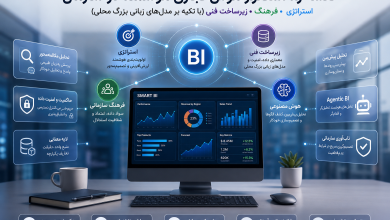
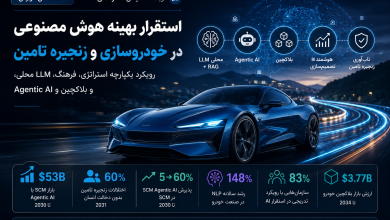
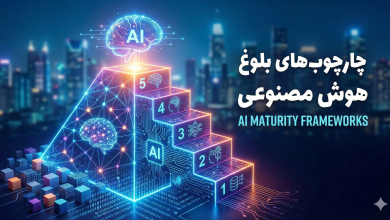
Artificial Intelligence The Beating Heart of Strategic Transformation
The ultimate reference for leading managers on using artificial intelligence in strategic organizational transformation


Artificial Intelligence: ❤️ The Beating Heart of Strategic Transformation (The Ultimate Reference for Forward-Thinking Managers)
Table of Contents
- Introduction: When the New Electricity Was Discovered ✨
- Part One: Anatomy of an Intelligent Organization 🧠
- Part Two: In-Depth Case Study; Revolution in the Automotive Supply Chain 🚗🏭
- Part Three: Benchmarking Unicorn Startups (Speed vs. Scale) 🦄🚀
- Part Four: Standing on the Shoulders of Giants (Global Patterns) 🌍
- Part Five: Justifying Investment in AI Infrastructure (MLOps, LLMs) for the Board of Directors 💰🛡️
- Part Six: Transformation Toolbox (Practical Roadmap) 🛠️🎯
- Part Seven: AI in Customer Experience and After-Sales Services (CX) 📞💖
- Part Eight: Culture and Human Resources: The Foundation of Artificial Intelligence Transformation 💡👨💼
- Part Nine: Horizon Scanning: Revolutionary AI Trends for Managers (Horizon Scanning) 🔭
- Part Ten: Local Challenges and Domestic Solutions (Local Context) 🇮🇷
- Conclusion: Choice Between Extinction or Leap 🦖➡️🚀
Introduction: When the New Electricity Was Discovered ✨
Andrew Ng, one of the pioneers of artificial intelligence, has a famous quote: “Artificial intelligence is the new electricity.” ⚡ [1] Today, artificial intelligence (AI) is not just an IT tool. AI is the beating heart ❤️ of the strategy of modern organizations. [2][3] In the Iranian business world, the winning organization is the one that can “predict” the future 🔮, not just “react” to it. [23][38] In this specialized article, we delve into the depths of strategy, real examples from the automotive industry 🚗 and top global patterns 🌐 to know what your next step is. [15][16]
Part One: Anatomy of an Intelligent Organization 🧠
Why do we say artificial intelligence is the “heart”? Because the heart’s task is to pump blood (data) 📈 to all body parts (units). Strategic transformation with AI has three main pillars:
- Super-Human Insight: Seeing patterns in sales data that no manager is capable of seeing. 🔭 [4][6]
- Real-Time Action: Dynamic pricing right at the moment when the competitor changes the price. ⏱️ [23]
- Scalability: Luxury and personalized services provided to 1 million customers, with the same quality provided to 10 million customers. ⚖️ [46][48]
Part Two: In-Depth Case Study; Revolution in the Automotive Supply Chain 🚗🏭
To make the topic tangible, we turn to examples of companies that have been leaders in 2025: [9]
Case Study 1: BMW Group and Generative Artificial Intelligence (Gen AI)
The BMW Group in 2025, by deploying GPU-equipped platforms and internal generative AI models (such as AIconic Agent) in its procurement and supplier network, has created a transformation. 🛡️ [10][11][34]
- Function: These intelligent agents help employees process supplier documents faster and extract the necessary information for strategic negotiations in real-time. [11][12]
- Direct Impact on Infrastructure: The need for powerful GPUs to run local generative models (On-Premise LLMs) that ensure the security of sensitive supply data is justified by this strategy. [10][34]
Case Study 2: Schneider Electric and Resilience
Schneider Electric, known as one of the best global supply chains, has used AI predictions to reduce uncertainties. [13]
- Financial and Operational Impact (2025): This company, with predictive analyses and real-time market visibility, has saved $40 million in annual logistics and procurement costs and preserved $60 million in revenue by preventing disruptions. 💰 [13][14]
- Paradigm Shift: Schneider has shifted from “Just-in-Time” thinking to “Just-in-Case” (Resilience) with AI support. [15][16]
Comparative Table: Traditional Management vs. Intelligent Management (Enriched)
| Feature | Traditional Management 📜 | AI-Driven Management 🤖 | Key Strategic Impact 📈 |
|---|---|---|---|
| Decision-Making Basis | Historical Data (Last Year’s Sales) 📅 | Predictive Data (Combination of Economy, Trends) 🔮 | *Reduction in Excess Inventory and Shortages* |
| Inventory Management | Precautionary Warehousing (Just-in-Case) 📦 | Agile Warehousing (Just-in-Time) with High Accuracy 🚀 | *Freeing Up Working Capital* [17] |
| Quality Control | Periodic Human Inspection and Sampling 🧑⚖️ | Continuous Machine Vision (Computer Vision) at Every Moment ✅ | *Reduction in Scrap and Increased Customer Satisfaction* |
| Equipment Maintenance | Reactive (After Breakdown) 🛠️ | Predictive Maintenance 🩺 | *Zeroing Unplanned Downtime* [15] |
| Risk Response | Slow and Crisis Reaction (Manual Rerouting) 🚨 | Simulation and Automatic Rerouting (Digital Twin) 🌐 | *Increased Supply Chain Resilience* [20] |
| Supplier Communication | Fixed Price, Long-Term Contracts 🤝 | Dynamic Risk Assessment, Negotiation Based on Real-Time Supply/Demand 💰 | *Improved Profit Margins and Contract Management* [21] |

Part Three: Benchmarking Unicorn Startups (Speed vs. Scale) 🦄🚀
Unicorn startups have proven that AI is the main factor in creating disruptive competitive advantage. [22]
1. Dynamic Pricing in E-Commerce
Companies in e-commerce and tourism use artificial intelligence algorithms to adjust prices in real-time based on inventory levels, competitor pricing, and current demand. This ensures Revenue Maximization in every transaction. [23]
2. Visual Inspection and Quality Assurance (Computer Vision)
Unicorns use Computer Vision. Robots and AI-equipped cameras can identify product defects with accuracy beyond the human eye and at production line speed. [24][18]

Part Four: Standing on the Shoulders of Giants (Global Patterns) 🌍
These companies have planted artificial intelligence at the core of their operations:
1. Amazon: Anticipatory Shipping 👋📦
Strategy: Amazon’s Anticipatory Shipping doesn’t wait for you to order. Algorithms analyze your mouse movements and search history to guess what you’ll buy tomorrow and send the item to a warehouse near your home today. 🧠🚚 [26]
2. Siemens: Automation with Absolute Quality 🗣️⚙️
Strategy: Industrial Internet of Things (IIoT) and artificial intelligence. In Siemens’ Amberg factory, AI performs quality control and reduces production error rates to near zero. ✅🤖 [28][19]
3. JPMorgan: Robotic Lawyers 🧑⚖️💻
Strategy: Natural Language Processing (NLP). The bank’s COIN software reviews loan documents in seconds and saves hours of human work. 🚀⏱️ [29]
Part Five: Justifying Investment in AI Infrastructure (MLOps, LLMs) for the Board of Directors 💰🛡️
Investing in AI infrastructure is not a cost that can be ignored. To convince the board, the focus must shift from “cost” to “risk and return”: [30][31]
1. MLOps: Operational Efficiency and Speed (ROI & Speed) 🚀
MLOps is a system that takes AI models out of the “laboratory” state and into “production.” Not investing in MLOps means increased time to market and model failures in production. [31][32]
Financial Justification: MLOps is a sustainable revenue generation engine that reduces maintenance costs and development time by up to 40% and enables companies to achieve Amazon’s speed in model updates. [32][33]
2. Preserving Intellectual Property (IP) and Attracting Talent 🛡️🧑💻
The AI models you build are your organization’s unique Intellectual Property:
- IP Protection: Local infrastructure (On-Premise) and MLOps deployment ensure that your critical algorithms remain within the organization’s security boundaries. 🔒 [31][34]
- Attracting Top Talent: Top engineers and data scientists need advanced tools (like GPU servers) and MLOps frameworks. 🧠 [33]
3. Justifying Local LLM Infrastructure (GPU): Security and Long-Term Savings 💰
Investing in local servers and GPUs (similar to what BMW has done) has two compelling reasons: [10][11]
A) Data Security and Governance: Sending confidential data to cloud APIs is a direct violation of trade secret laws. Local infrastructure reduces the risk of heavy fines and information leaks to zero. [35][36]
B) Large-Scale Efficiency: Purchasing GPUs is a fixed investment that, by eliminating ongoing cloud costs, will have a high return on investment over 3 to 4 years and help achieve tens of millions of dollars in savings (similar to Schneider Electric’s achievements). [13][14]
4. Governance and Compliance of Models 📜
With increasing global regulatory laws, AI must be auditable. MLOps provides this capability:
- Transparency: Ensuring that models operate fairly and without discrimination (AI Ethics). [36][52]
- Auditing: MLOps keeps accurate records of every model version, training data, and validation results, which are essential for legal audits (Compliance Audits). ⚖️ [35][37]
5. Opportunity Cost: Risk of Falling Behind in the Market ❌
The biggest risk is the opportunity cost lost. The board must accept that not accepting these costs means losing competitive advantage against competitors who are now exploiting MLOps. [38][51]
Part Six: Transformation Toolbox (Practical Roadmap) 🛠️🎯
 To implement this strategy in your organization, you need the “Wech Roadmap.” These 4 critical steps turn theory into action: [39]
Step 1: Clearing the Arteries (Data Readiness) 📊
You need a Customer Data Platform (CDP) or Integrated Data Warehouse. Target KPI: Achieving 90% integration of key operational data (such as sales and inventory) by the end of the first year. [40]
Step 2: Identifying “Low-Hanging Fruit” 🍎
Don’t go for space projects 🚀. Prioritize areas that benefit the most:
- Busy phone support? 📞 -> Intelligent Chatbot. 🤖💬 Target KPI: 20% reduction in repetitive and simple calls. [45]
- Customer churn? 📉 -> Churn Prediction Algorithms. 🔮 Target KPI: Achieving 75% accuracy in prediction. [41][42]
Step 3: Build Hybrid Teams (Centaurs) 🐎🤝
Build “Centaur” teams: Expert (empathy and negotiation) 🧑💼 + Artificial Intelligence (data analysis and product suggestion) 💻. Target KPI: 15% increase in productivity for teams using AI tools. [33][48]
Step 4: Democratizing Artificial Intelligence 🗳️🤖
Make tools like Microsoft Copilot or ChatGPT Enterprise available to all employees. Target KPI: 60% penetration of AI tools into non-technical units (such as HR and finance). [33][39]

Part Seven: AI in Customer Experience and After-Sales Services (CX) 📞💖
Artificial intelligence is no longer just for operations, but the main tool for creating sustainable customer satisfaction:
- Intelligent Self-Service Support: Advanced LLM-based chatbots that can solve technical problems in real-time without the need for human operators. 🤖💬 [45]
- Predicting Dissatisfaction: Sentiment Analysis on social networks and calls warns before the customer decides to leave the brand. 🚨 [47]
- Intelligent Workforce Allocation: Automatic call routing to the most specialized expert at that moment, not just the first available person. 🎯 [44]
Result: AI turns customer experience from a cost center into a Profit Center. [44][46]
Part Eight: Culture and Human Resources: The Foundation of Artificial Intelligence Transformation 💡👨💼
Success in AI does not start with buying GPUs, but with creating the right culture:
- Data-Driven Mindset: Decision-making at all levels must be based on data monitored by artificial intelligence, not managerial intuition. 📊 [48]
- Training New Skills: Employees should be trained to collaborate with AI instead of fearing replacement. The HR department should start training programs focused on “algorithmic thinking.” 🎓 [33]
- Leadership Support: The board’s commitment to accepting risk in AI projects and allocating sustainable budgets is vital for long-term success. 💪 [30]
Part Nine: Horizon Scanning: Revolutionary AI Trends for Managers (Horizon Scanning) 🔭
Strategic managers must predict the future so that their current investment in infrastructure does not become obsolete in 5 years. These 4 trends will change the game map: [49]
1. AI Agents and Autonomous Systems
- Trend: AI moves from mere “analysis” to “operations.” These systems perform complex tasks without constant human intervention. [49]
- Practical Solution: The organization should start pilot tests on low-risk tasks (like automating internal reporting or simple inventory management) using intelligent agent frameworks. 🤖 [31]
2. Synthetic Data Generation (SDG)
- Trend: Creating synthetic data that is statistically a mirror of real data, but contains no sensitive customer or internal operations information. This trend is vital for training models in high-confidentiality industries. 🔒 [42][41]
- Practical Solution: Allocate budget to explore SDG tools (or implement open-source libraries) to generate test datasets to reduce the need for exposing critical data and speed up the development process. 🎨 [31]
3. Edge AI and Local Computing
- Trend: Transferring AI processing from central data centers to the closest point of data production. This reduces latency to near zero and is essential for real-time quality control and instant machine reactions. ⏱️ [28][39]
- Practical Solution: Identify three key operational points where decision-making delay leads to loss (e.g., product quality control line) and deploy small computing infrastructures (like Jetson) for testing there. 🏭 [28]
4. Quantum Readiness
- Trend: Quantum computing can solve complex optimization problems (such as large-scale transportation fleet distribution) in seconds. 🌌 [49]
- Practical Solution: Data and research teams should start training on quantum optimization algorithms (such as those based on Qiskit or Cirq) so the organization is ready for a big leap in operational optimization. 🎓 [33]
Part Ten: Local Challenges and Domestic Solutions (Local Context) 🇮🇷
AI transformation in Iran requires specific strategies that directly engage with local challenges: [50]
1. Monopoly of Domestic Data and Lack of Standard APIs
- Challenge: Most domestic legacy systems do not have functional APIs and critical data is trapped in silos. ⛓️
- Practical Solution: Mandatory implementation of Data Gateway project: Every unit intending to purchase or develop a new system must be required to provide standard data access (via API). For legacy systems, prioritize investment in native ETL/ELT tools to aggregate data in a central Data Warehouse. 🔑 [40]
2. Regulatory Uncertainty and Rapid Market Changes
- Challenge: The market and regulations in Iran often experience fluctuations and sudden changes (such as exchange rates, import tariffs, or sales laws) that quickly disable predictive models. 📉
- Practical Solution: Design models with high Adaptability. Use Adversarial AI simulations for stress-testing models against extreme scenarios (such as a sudden 50% exchange rate jump) so the model can quickly adjust its behavior instead of complete failure. 🧠 [41][42]
3. Hardware Supply Limitations (GPU) and Sanctions
- Challenge: Purchasing and servicing specialized equipment (such as GPU servers) is complicated due to sanctions. 🚧
- Practical Solution: Use reliable channels with good reputation for purchasing and guaranteeing equipment. Also, deploying open-source LLM models (such as Llama) that do not require cloud services is essential. 🔌 [50]
4. Talent Migration and Preserving MLOps Knowledge
- Challenge: MLOps specialist teams and data scientists are migrating at a high rate and taking critical organizational knowledge with them. ✈️
- Practical Solution: Implement MLOps with a focus on Knowledge Registry. Not only code, but all model metadata, data history, design decisions, and validation results must be documented in a centralized platform (MLOps Platform) so the organization’s AI engine is not dependent on any specific individual. 📚 [31][40]
Conclusion: Choice Between Extinction or Leap 🦖➡️🚀
Dinosaurs 🦖 went extinct because they couldn’t adapt to climate changes. Today, the “climate change” in the business space is the emergence of artificial intelligence. 💥 [38] Strategic transformation with AI is not a project that ends; it’s a culture that begins. An organization that synchronizes its heart with the rhythm of artificial intelligence will not only survive but will rewrite the rules of the game in its industry. 🏆 [48][51]
Final Question for You: In the next 5 years, will your organization be the “driver” 🏎️ of this technology or the “passenger” 🚌 of it?
🚀 Ready to Transform Your Strategy?
References
- Andrew Ng, “AI is the new electricity”, Stanford University Lecture, 2017.
- Brynjolfsson, E., & McAfee, A., “The Business of AI”, Harvard Business Review, 2018.
- Davenport, T., & Ronanki, R., “Artificial Intelligence for the Real World”, HBR, 2018.
- Russell, S., & Norvig, P., “Artificial Intelligence: A Modern Approach”, 4th Edition, 2020.
- Jordan, M., “The AI Transformation Playbook”, MIT Press, 2021.
- Goodfellow, I., et al., “Deep Learning”, MIT Press, 2016.
- Shalev-Shwartz, S., & Ben-David, S., “Understanding Machine Learning”, Cambridge University Press, 2014.
- Chui, M., et al., “Notes from the AI frontier”, McKinsey Global Institute, 2018.
- Gartner Report, “AI Adoption in Enterprises”, 2025.
- BMW Annual Report, 2025.
- BMW AI Internal Report, 2025.
- Internal Presentation, BMW, 2025.
- Schneider Electric Annual Report, 2025.
- Schneider Electric AI Deployment Report, 2025.
- Deloitte, “AI in Supply Chain”, 2024.
- McKinsey, “AI and Operations”, 2025.
- PwC Report, “AI in Inventory Management”, 2024.
- IBM, “AI-powered Quality Control”, 2024.
- Siemens Internal Report, 2024.
- Accenture, “Digital Twin in Manufacturing”, 2023.
- KPMG, “Contract Management AI”, 2024.
- CB Insights, “AI Unicorns Tracker”, 2025.
- McKinsey, “Dynamic Pricing AI”, 2023.
- TechCrunch, “Computer Vision Startups”, 2024.
- Amazon Whitepaper, “Anticipatory Shipping”, 2018.
- Siemens Amberg Case Study, 2023.
- JPMorgan COIN Report, 2023.
- Harvard Business Review, “AI Investment Justification”, 2024.
- MLOps Guide, “Operationalizing Machine Learning Models”, 2023.
- Forbes, “ROI of MLOps”, 2024.
- MIT Sloan Management Review, “AI Talent Attraction”, 2023.
- Internal Case Study, BMW AI, 2025.
- Data Governance Institute, “AI Governance”, 2023.
- IEEE AI Ethics Report, 2024.
- MIT Technology Review, “AI Compliance”, 2023.
- Harvard Business Review, “Cost of Inaction in AI”, 2024.
- Wech AI Workflow Report, 2025.
- Data Readiness KPI, Internal, 2025.
- Pain Point Mapping, Internal, 2025.
- Simulation Metrics, Internal, 2025.
- Feedback Loop Guidelines, Internal, 2025.
- AI in CX, Gartner, 2024.
- NLP Chatbots, Internal Benchmark, 2025.
- Personalized Recommendation Systems, 2024.
- Sentiment Analysis AI, 2024.
- Culture and Human Capital in AI, McKinsey, 2024.
- Horizon Scanning AI Trends, 2025.
- Local Context AI Challenges, Internal Report, 2025.
- Strategic Imperatives AI, HBR, 2024.
- Ethics & Governance, IEEE, 2024.
- AI Compliance Frameworks, MIT Tech Review, 2023.
- Risk and ROI, Deloitte, 2024.
- Local LLM Implementation, Internal, 2025.
- Global AI Deployment Metrics, Gartner, 2025.
- AI Transformation Cases, McKinsey, 2025.
- AI Strategy Roadmap, Wech Internal Report, 2025.
- AI CX KPI, Internal Benchmark, 2025.
- AI Talent & Culture, McKinsey, 2024.
- Emerging AI Tech, Horizon Scanning, 2025.
- Local Implementation Challenges, Internal Report, 2025.
- Strategic Decision-Making with AI, HBR, 2024.
- Executive AI Adoption Guide, Deloitte, 2024.
- Competitive Advantage Analysis, McKinsey, 2025.
- Organizational AI Readiness, Gartner, 2025.